
The cheap food grade compression pump, investigated.
We often get asked about these very cheap compression pump sprayers, sold for the garden. Some claim to be food grade professional products, which is odd considering they run at pressures too low to atomise well. So let’s look at them properly, from technology, application and regulation.
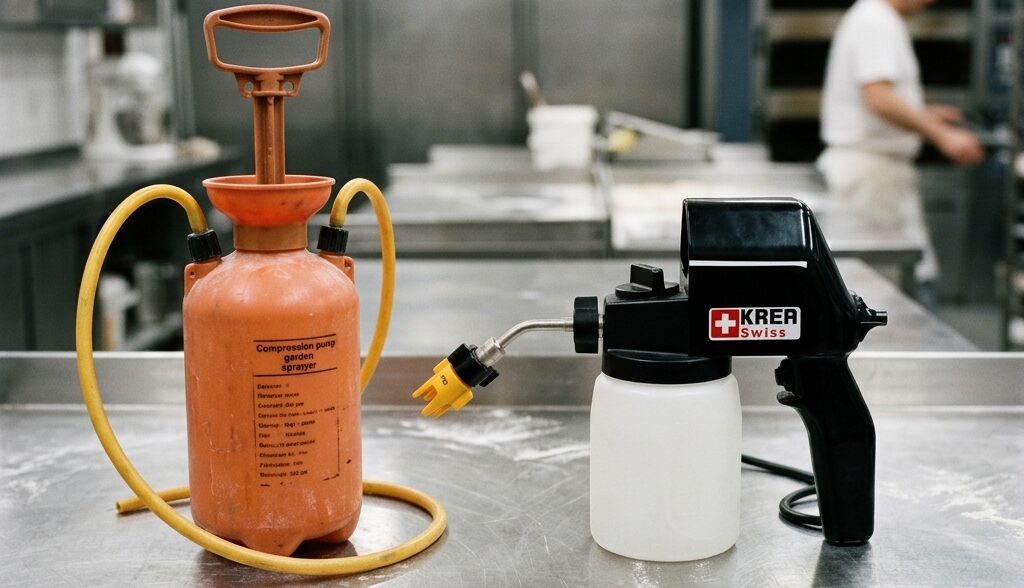
Same job on paper. Only one carries the test results.
Three questions decide whether one of these belongs in a professional kitchen.
We take them in that order. The first is critical: if it’s not certified food grade, it fails, whatever its other qualities.
First, does it pass food contact regulations?
Marketing blurs three very different claims.
Only independent certification counts. In a commercial kitchen the risk is yours, and ignorance is not a defence.
The declaration has to travel with the product
In the EU, Article 16 of Regulation (EC) 1935/2004 requires food contact articles to be accompanied by a written Declaration of Compliance, sometimes called a Declaration of Conformity, its contents set out in Annex IV of Regulation (EU) 10/2011. In the US the equivalent is FDA 21 CFR 175 and 177. If a sprayer is sold for use in a professional food environment, that declaration must be included.
If in doubt, ask for the food declaration and make sure it describes the tests carried out, the simulants used, the time and temperature conditions, the results against the legal limits, and the materials of every part that touches food.
Professional food sprayers versus consumer sprayers
What separates a consumer product from a professional one is material selection and tolerances, and those materials must also pass food migration testing. Lead free brass, for instance, costs more than ordinary brass and is harder to source in small volume.
Don’t ask only about the seals. Ask which metals or plastics sit in the migration path, from the material container through to the nozzle. Stainless steel is a good answer, though it costs more and isn’t commonly used, and in markets such as the United States food grade stainless has to carry a minimum of around 18 percent chromium. These are the details a maker outside the food industry often doesn’t know to check, and it’s exactly where a cheap sprayer falls down.
What a complete answer looks like
Substance
Found
Limit
Result
Our own results, from an independent accredited laboratory, against EU 10/2011 and FDA 21 CFR 177, REACH and BPA free, CE through Intertek. This is the kind of evidence to ask any supplier for. Full food safety and certification.
Second, is it powerful enough to atomise food materials?
If it’s passed the certification hurdle, the next thing to check is whether it’s powerful enough to actually spray thick food materials. This is where references such as 3 bar are misleading, because pressure is only part of the story.
Atomisation, which means creating the fine mist that gives good coverage, is decided by pressure. Working against that pressure is viscosity, the material’s resistance to flow. Roughly speaking, thinner materials are described as lower viscosity and thicker materials as higher, though it is not a strict rule and temperature changes it considerably: oil is thicker cold and thinner warm, and chocolate is unsprayable cold but sprays cleanly once melted and warm. It’s why a sprayer that copes with water can fail completely on egg wash.
What the viscosity numbers mean
Viscosity is commonly given in centipoise, written cP. Water is the reference point at 1 cP, so a material at 2,000 cP resists flow roughly two thousand times more than water. A sprayer has to overcome that resistance to break the material into droplets.
The other common measure, and the one sprayers are usually rated in, is DIN seconds. A DIN cup is a cup of fixed volume with a fixed hole in the base: you fill it and time how many seconds the material takes to run out, so a higher number again means a thicker liquid.
The two are related but they are not the same measurement, so it is worth showing how one becomes the other. Centipoise measures dynamic viscosity, the material’s internal resistance to flow. A DIN cup measures kinematic viscosity, in centistokes, which is how the material flows under its own weight, so density comes into it as well. The bridge between them is simply:
centistokes = centipoise ÷ density
Most food materials have a density close to 1, so the two figures land near each other. DIN 53211 then converts centistokes into seconds. Taking egg wash as the worked example: 150 cP divided by a density of 1.03 gives about 146 centistokes, which runs through a DIN 4 cup in about 35 seconds. That is the figure in the table below.
One practical limit: a DIN 4 cup reads reliably between roughly 25 and 150 seconds. Anything thinner runs out too quickly to time accurately, and anything thicker takes too long, so those materials are measured with a larger cup or a laboratory viscometer instead.
Pressure moves the liquid. Atomising needs far more.
Three bar is a real pressure, and it will drive a jet of water several metres from a garden hose. But moving a liquid through a sprayer and atomising it into a fine mist are two different jobs. On a garden hose, the jet setting sends a thin stream of water a long way. Open it to a finer spray and it no longer travels far, and you still don’t get a mist, you get a wider spread of larger droplets. The 3 bar of these low pressure systems moves plenty of liquid, but it can’t atomise that liquid into droplets small enough to hang as a mist. That takes far more power, which is why airless equipment runs at 80 to 230 bar rather than 3 bar.
Nozzle design is also essential for atomising
Pressure alone isn’t the end of it, and how the nozzle is designed matters as much as the number behind it. A compressed air system atomises with air itself, which is why those guns can run a simpler outlet. A piston sprayer works at far lower pressure than compressed air equipment, so it has to earn the mist another way: the nozzle spins the liquid before it leaves, sending it round in a ring so it exits already trying to fly apart. That swirl is how a piston sprayer produces a fine mist without an air supply.
A plain orifice at low pressure has neither of these. The liquid leaves as a coarse spray with a large droplet size and doesn’t atomise. Open a cone nozzle to its finest setting and you get a ring, a heavy edge with a thin middle, because the sheet of liquid never breaks into small droplets before it lands.
At 3 bar, opening the nozzle for a finer spray spreads the same coarse droplets over a wider circle and leaves the middle thin. It doesn’t fill the pattern in.
The mist also has to survive the distance
A professional sprayer must atomise and keep that mist intact up to a metre away, so one pass covers a full tray evenly. A low pressure sprayer only keeps its pattern up close, the same limitation as a food aerosol can, where the propellant carries the mist a few centimetres before it collapses.
Volume is not the point. Exit velocity is.
Quoting a flow rate tells you nothing about spray pattern, distance or atomisation quality. It states only how much liquid passes through the sprayer in a minute. A food labelled compression sprayer might be rated at half a litre a minute, more than many powered sprayers, and that figure is theoretical anyway: it’s hand pumped, so you spray, stop, pump and spray again, much as you would work a bellows. There is no continuous half litre.
Volume isn’t what decides atomisation. A bucket emptied delivers a litre in half a second: high volume, no pressure, no mist. What matters is how fast the liquid leaves the nozzle. Our own food sprayers run at about 200 grams a minute of release agent, with the fine mist reaching up to 2 metres, enough to cover roughly 10 m² of baking trays very quickly and with an excellent fine finish.
And with a compression pump the pressure falls as you work
A compression sprayer holds a fixed pocket of compressed air above the liquid, and that pressure starts falling the moment you begin spraying. Each time you press the trigger you use up some of the stored pressure. Instruction sheets for these sprayers tell you to keep pumping the lever while you spray to make up for it. The coating applied at the start is therefore not the coating applied at the end.
Schematic, not measured data. The shape follows from stored pressure and the maker’s own instruction to keep pumping.
Why chocolate breaks the rule
Water, oil and egg wash behave much the same at rest as they do when forced through a nozzle. Melted chocolate doesn’t. It’s pseudoplastic, or shear thinning: the harder you work it, the thinner it behaves. Published chocolate viscosities are apparent figures measured at very low shear, and a DIN cup measures flow under gravity, which is about as gentle as it gets. A nozzle does the opposite, and under that shear chocolate thins dramatically. So the static figure looks impossible while the material sprays perfectly well, and our foodSPRAY Pro sprays neat chocolate, one hundred per cent couverture with nothing added.
Cocoa butter is added for spraying, usually half and half or 60 to 40, to change the finish rather than to make it sprayable, because the extra cocoa butter is what gives a velvet effect its fine structure. Our chocolate sprayer was developed with Barry Callebaut to run that mixture at 28 to 35°C, and the heated nozzle stops the chocolate setting rather than forcing it through. Pure cocoa butter is the opposite problem, thin enough that it takes our smaller R4 nozzle to atomise it finely.
Honey and treacle are the real exceptions. They don’t shear thin, so working them harder doesn’t make them flow, and they won’t atomise at any pressure. Everything else in a kitchen sprays, given the power and the right working temperature.
Third, can the sprayer be hygienically cleaned?
Liquid sits in and passes through several parts, including a suction tube inside the container. If those parts can’t be reached, they can’t be cleaned. Sealed bodies and membrane seals are cheap to make and can’t be opened, inspected or dried, so they can’t be verified as clean.
This matters most with egg wash, a growth medium where salmonella is the risk. A part you can’t open is a part you are trusting rather than checking. Reliability follows the same line: cheap equipment tends to fail when worked hardest, and a kitchen can’t afford a sprayer that stops mid job.
Food labelled compression sprayers.
A search for a food sprayer returns a dozen of these: the IK Food 1.5, the Birchmeier Food-Matic and Grill Star, Kwazar’s food grade sprayer, Marolex, Matabi, the Gardena EasyPump, and a long tail of unbranded oil misters sold through the marketplaces.
They may look slightly different, but they use the same technology. Some are pumped by hand, some squeezed by trigger, and one or two carry a small battery pump that keeps the container topped up. All are low pressure, and none produces a continuous volume.
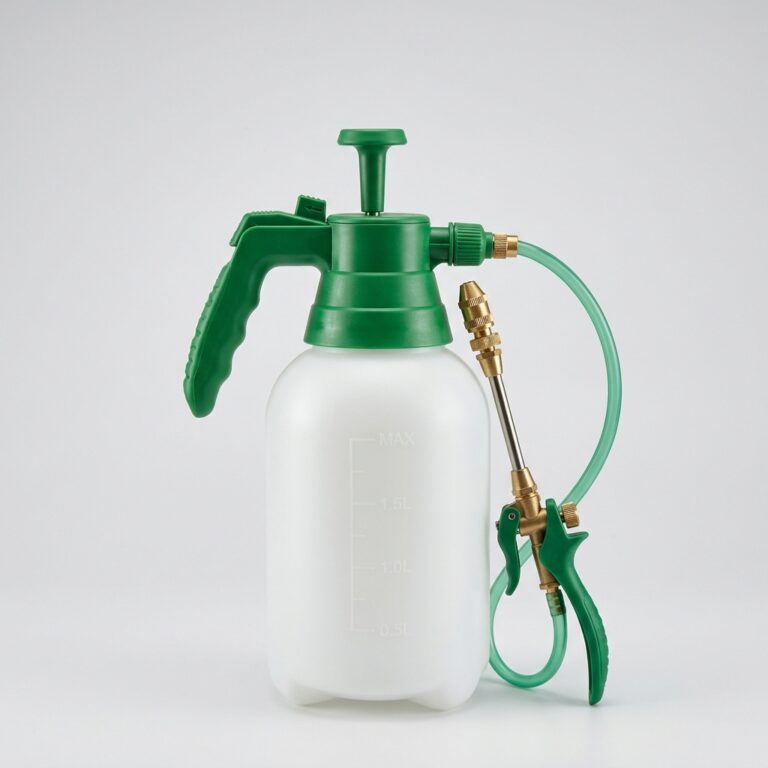
IK Food 1.5
Hand pumped, 3.5 bar falling
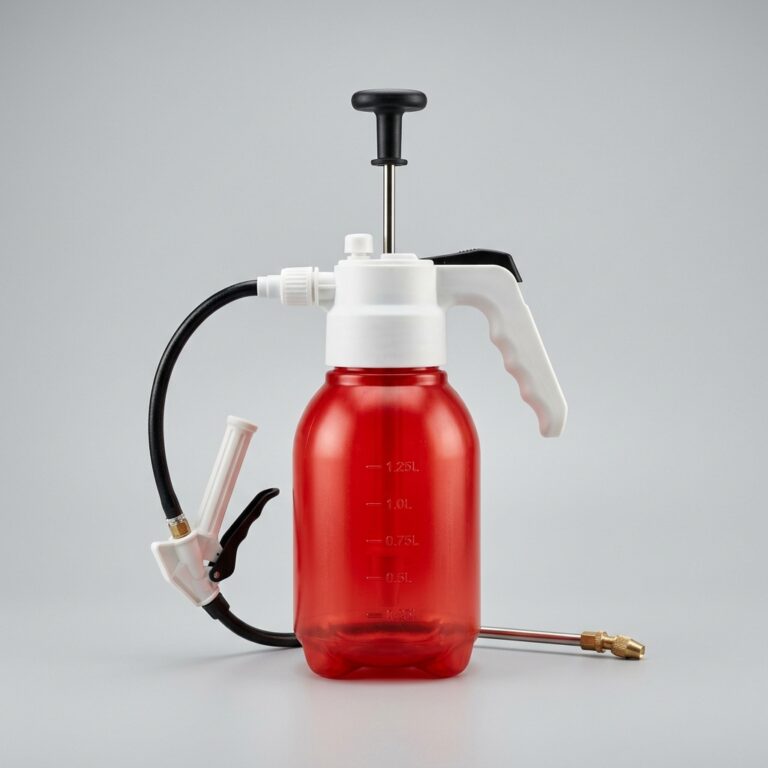
Birchmeier Food-Matic 1.25 P
Compact pressure canister
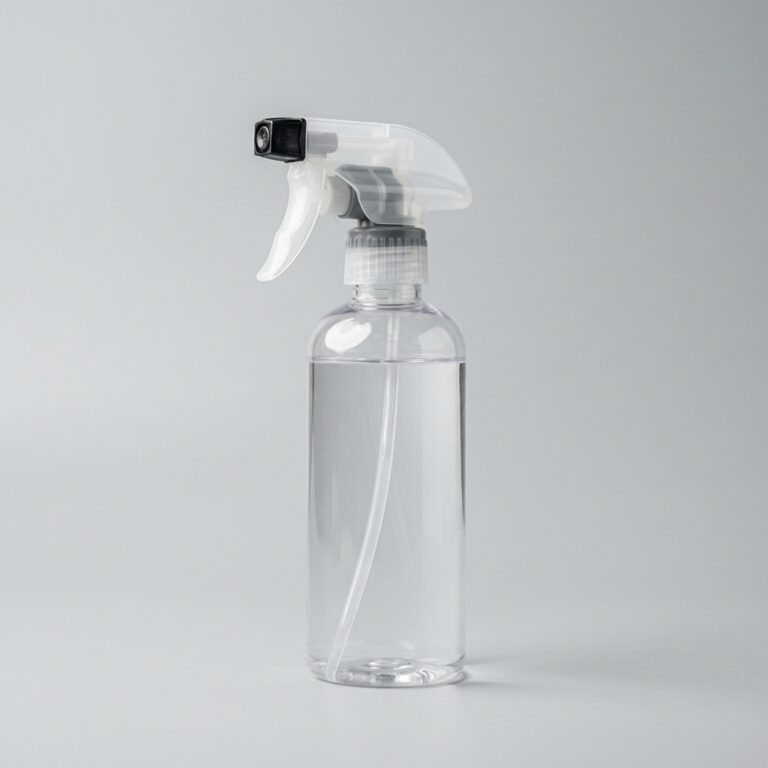
Birchmeier Grill Star 0.5
Squeeze-trigger mister
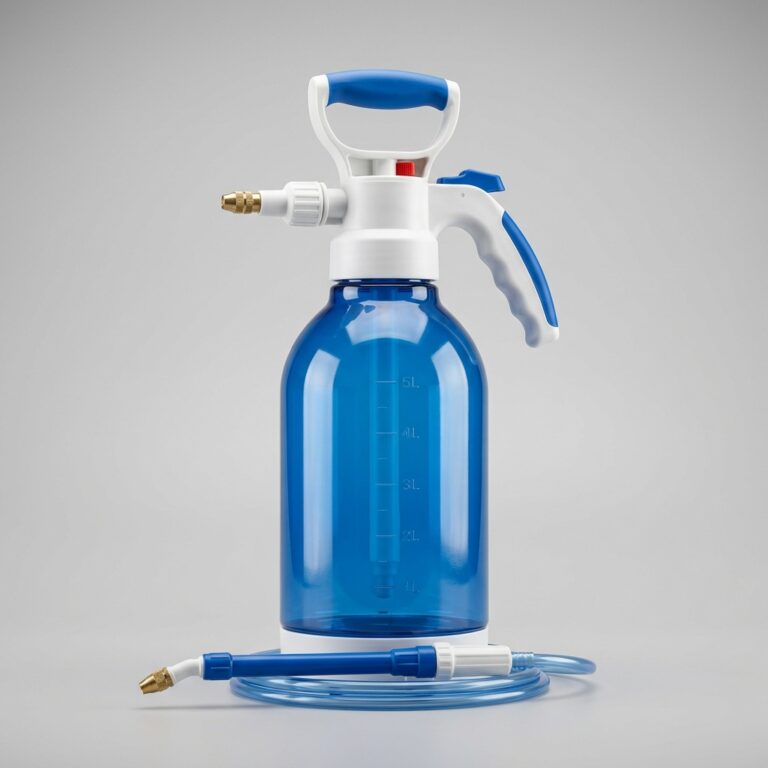
Kwazar Food Grade
Pressure compression bottle
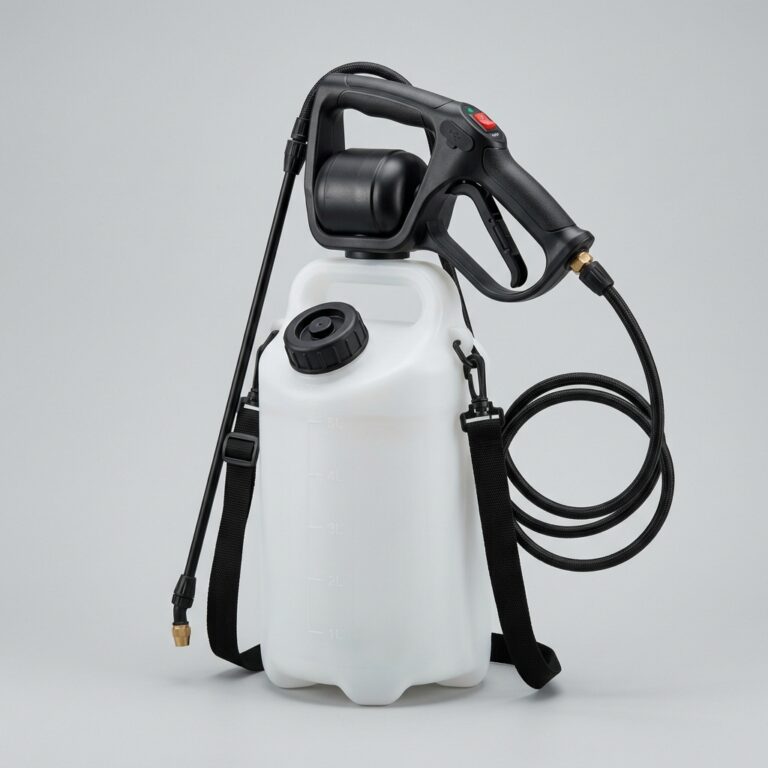
Gardena EasyPump
Battery assisted garden pump
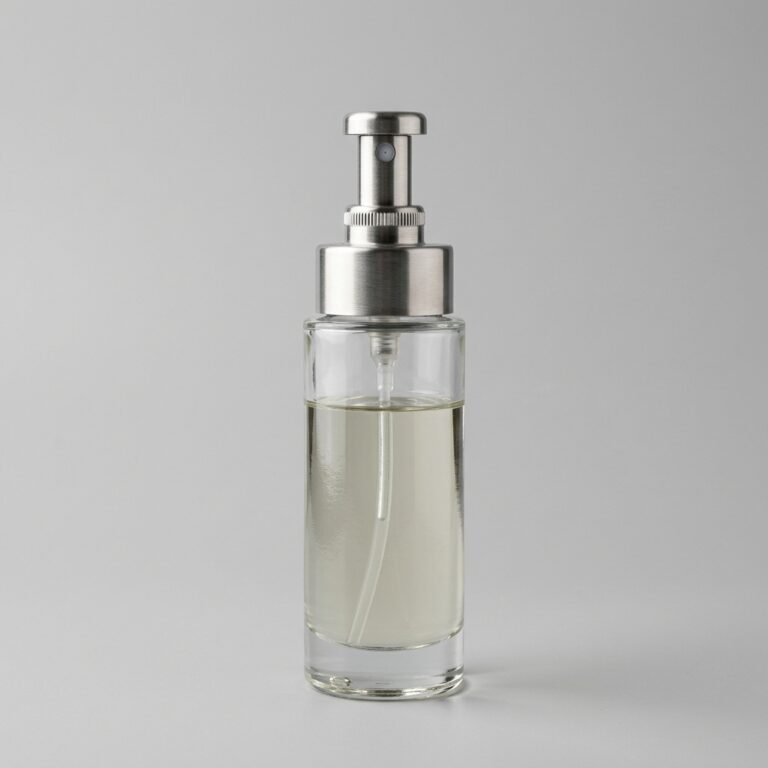
Unbranded Oil Mister
Glass & stainless mister
If the food documentation checks out, the first question is answered and the sprayer may be used in a kitchen. That doesn’t answer the second. At around 3 bar through a plastic nozzle, with the pressure falling as it’s used, none of these will atomise a viscous food material into a fine mist, hold that mist at a distance, or sustain the output through a service. They’re built for light intermittent work and are adequate for it.
The question isn’t whether they’re well made, or whether the paperwork is in order. It’s whether low pressure and intermittent volume are sufficient for professional food work. They aren’t.
Where a compression sprayer is the right tool.
For low pressure, low volume work with thin liquids, it’s the right tool. Light, cheap, no power, almost nothing to break. For watering plants and garden treatments nothing beats it on value.
For a professional kitchen it’s a different story. The versions regularly touted for professional kitchens aren’t designed, engineered or regulation certified for the job, whatever the marketing says. If it looks too good to be true, it usually is. A professional needs a professional tool, and quality always carries a cost.
Believe the facts, not the marketing.
If it seems we know a lot about spraying, it’s because our products are based on spraying technology the company has developed in Switzerland over about 80 years. We’ve provided sprayers for Bosch, Black & Decker, Unilever and numerous other brands over the decades. Our food sprayer competence goes back almost thirty years, to the first food sprayers we brought to market at the end of the 90s. We’ve invested in food grade laboratory testing since 1999, renew it regularly, and closely follow EU and US regulation changes. Our sprayers are sold in more than a hundred countries.
We design in Switzerland and manufacture in Germany, from high quality materials held to tolerances as fine as one thousandth of a millimetre, with most components sourced within 200 km of the production site.
Our sprayers are designed for simple, quick cleaning. One large wing screw detaches the whole food contact area from the electrics, and the container, nozzle and pump housing come apart in a minute. They can go in the dishwasher or be washed by hand.
We don’t make garden tools or consumer goods. We provide only professional, innovative equipment, manufactured in Germany.
The types of spray pump.
To put the comparison in context, these are the categories on the market. Almost every sprayer contains a pump, so the word on its own describes nothing.
HVLPhigh air volume, low pressure
A turbine pushes a large volume of air at low pressure and the air atomises the liquid. These are the units that look like a hair dryer or a vacuum cleaner, and the principle is close to a vacuum cleaner in reverse. Good on thin materials, weak as the material thickens.
Compressed airhigh volume, high pressure
A compressor feeds a conventional gun. Atomises and covers well, but needs a compressor, clean dry air, space and usually an extraction booth, since the overspray travels widely, which is why it’s found in paint shops and industrial plants.
Compression sprayerlow pressure, manual
The garden type. You work a lever to build a limited pressure into the container, and that pressure falls the moment you spray. Around 3 bar at best. Because it’s hand pumped, it has no continuous output, so a volume rating doesn’t really apply. This is the category sold as food grade.
Battery compressionlow pressure, powered
The same thing with a small electric pump holding the container topped up, so the pressure no longer falls. Still the same low pressure, so the spray quality is unchanged.
Piston sprayerhigh volume, high pressure
A motor drives a piston that pressurises the liquid on every stroke. No air, so all the liquid reaches the target, and pressure is made continuously rather than drawn from a store.
Professional food piston sprayerhigh volume, high pressure
The same piston sprayer, but designed specifically for food: certified food grade materials throughout, a swirl nozzle engineered to atomise, a construction that comes apart for cleaning, and independent laboratory certification. The category we work in.
Comparing the food application types.
IK Food 1.5. Hand pumped, 3.5 bar, falling as it’s used.
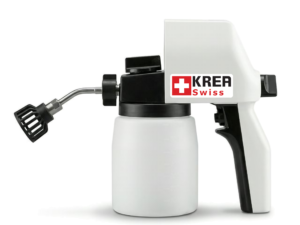
foodSPRAY Pro. Piston driven, constant pressure, about 200 g/min.
What to ask for when you buy.
When you buy a sprayer for food work, make sure it comes with a Declaration of Conformity. It should be a detailed document covering the CE position and the food regulation testing results, not a single line of reassurance. Ask us the same question you would ask anyone else.
Please send the Declaration of Conformity for this model, with the supporting independent laboratory test report showing which tests were carried out, the simulants used, the time and temperature conditions, and the results against the applicable limits.
A supplier holding the documentation can answer in a single email. A reply consisting only of the phrase food grade is itself an answer.
Frequently asked
Sources
The professional tool
Built for food, proven for food.
Buying for a group, a chain or under your own brand? We have supplied under other names for years, including Hendi, Pavoni Ovospray, Schneider Alexo and Matfer M25. OEM and reseller supply.